Idaho Construction Loan Closing Costs: What You Pay Before You Build
The down payment is not the only number you need before an Idaho build. Here is what construction-loan closing costs actually include, why the estimate can look different from a standard mortgage, and how one closing can simplify the project.
In This Guide
- 1.The Number That Surprises Idaho Builders
- 2.Separate Closing Costs From Your Down Payment
- 3.What Usually Appears on the Estimate
- 4.Idaho Costs: What Is Local and What Is Not
- 5.One Closing vs. Two: Why the Structure Matters
- 6.The Costs People Miss Before They Close
- 7.How to Read the Estimate Before You Commit
The Number That Surprises Idaho Builders
Most Idaho buyers expect a down payment or land equity. The surprise is the Loan Estimate: the costs of opening, documenting, insuring, and recording the loan. A borrower in a recent r/Homebuilding discussion asked why the estimate looked so high. There is no universal percentage. Costs depend on the structure, property, title history, appraisal, insurance, lender pricing, and whether there will be one closing or two. Ask which line items are loan costs, which are third-party costs, and which make up cash to close.
Separate Closing Costs From Your Down Payment
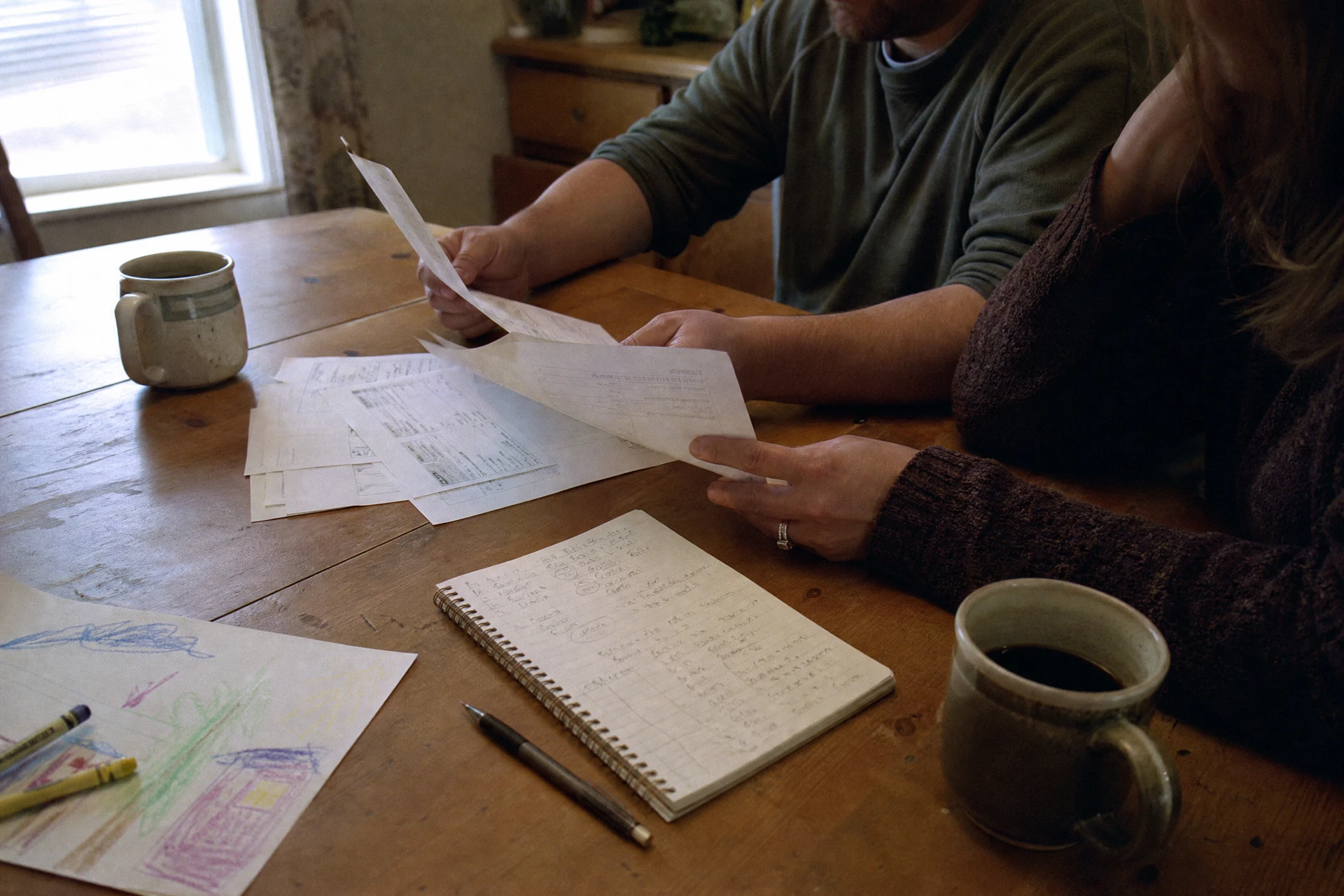
Separate two numbers that are often discussed together. Your required contribution is the cash or eligible land equity that supports the project. Closing costs are the charges needed to put financing in place. One does not replace the other. A free-and-clear lot with eligible appraised equity may satisfy the project contribution; it does not mean every closing charge disappears. Ask for the total cash-to-close calculation and each piece behind it.
What Usually Appears on the Estimate
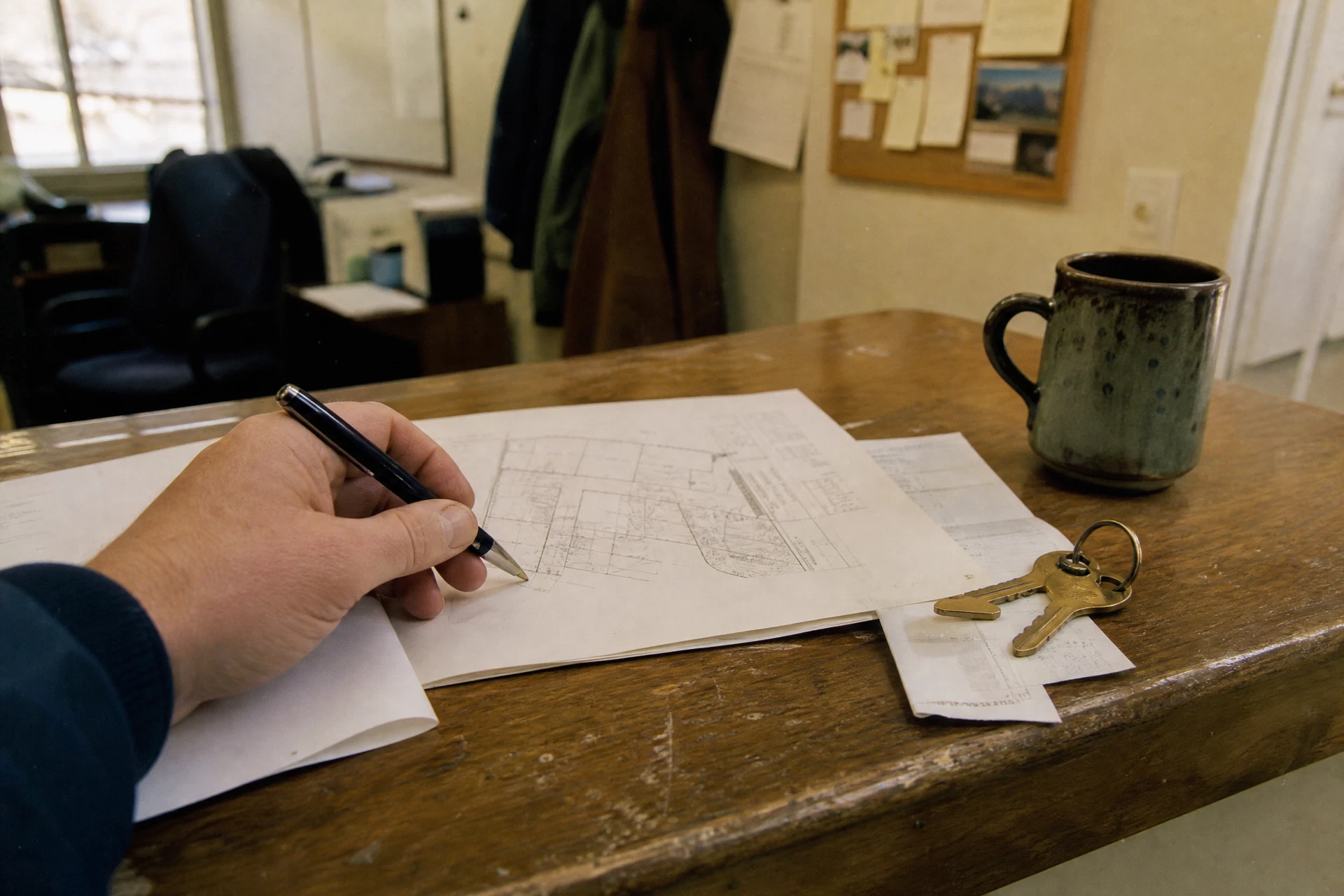
Construction-loan estimates are detailed because the lender is underwriting a proposed home as well as a loan. The CFPB Loan Estimate explainer recommends comparing total origination charges, lender-selected services, services you may shop for, and estimated cash to close. Do not compare one fee label in isolation. Compare the complete structure, rate, costs, draw administration, appraisal approach, and conversion terms.
- Lender charges: Origination, underwriting, processing, rate-lock, or similar charges. They vary by lender and program.
- Appraisal: A construction appraisal considers the completed home. Rural lots, custom plans, acreage, and unusual properties can make the assignment more complex.
- Title and escrow: Title work confirms ownership, liens, easements, and insurability; escrow coordinates the closing documents and funds.
- Recording and government charges: County charges record the deed and deed of trust or mortgage. These are small relative to many project costs, but still belong on the estimate.
- Prepaids and reserves: Depending on the property and program, the estimate can include initial insurance, taxes, or escrow funding. They are not the same thing as a lender fee.
Idaho Costs: What Is Local and What Is Not
Lender fees, appraisal complexity, title premiums, and insurance are specific to the file. County recording is a local piece you can verify. Valley County lists $15 to record a deed or conveyance and $45 for a deed of trust or mortgage. Do not fixate on the smallest line item. A mountain lot outside McCall, Owyhee acreage, or a custom home near Coeur d'Alene can require more title and appraisal work than a Meridian infill build.
One Closing vs. Two: Why the Structure Matters
A two-close structure generally means you close the construction loan first, then refinance into the permanent mortgage after completion. That can mean a second set of lender, title, escrow, and recording costs, plus another rate decision and underwriting event. A one-time-close construction-to-permanent loan is designed to move into the permanent mortgage without a second closing. It does not erase third-party costs or fit every borrower, but it can remove the duplicate closing event. Compare one-time close versus two-time close financing before judging quotes by the first estimate alone.
The Costs People Miss Before They Close
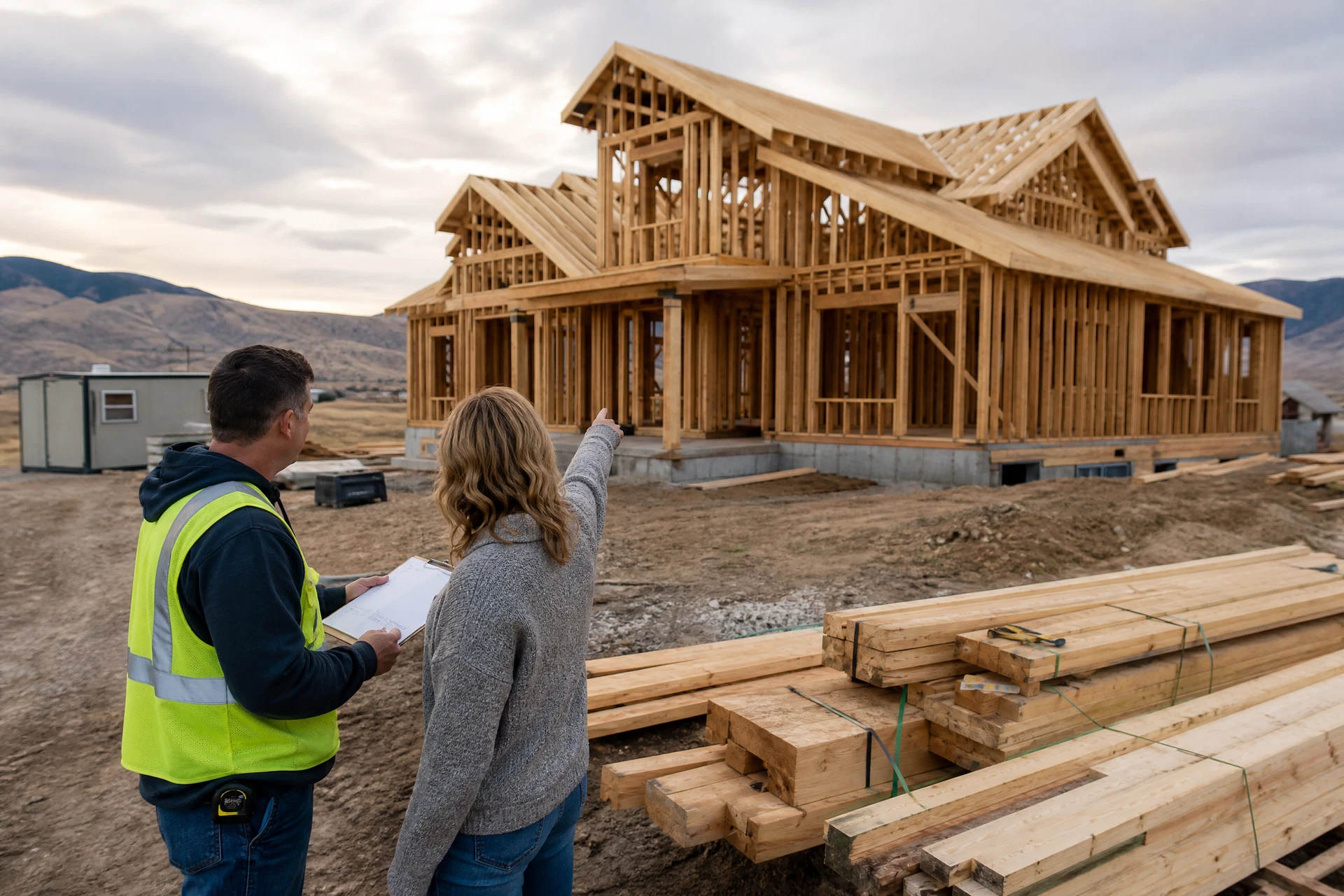
Not every pre-build expense is a closing cost, but all affect the cash needed before the first draw. Builder deposits, engineering, surveys, permits, soil work, well and septic investigation, temporary power, and insurance can arrive early. Put each one on the project cash-flow map instead of calling every expense a lender fee. If you self-fund early work, retain agreements, invoices, receipts, proof of payment, permits, and photos. The records matter for the appraiser, builder, lender, and future draw conversation.
- Ask the builder: Which deposits are due before closing, and which are part of the contracted build budget?
- Ask title and escrow: What does the title commitment show, and are there easements, liens, or prior work that need attention?
- Ask the lender: Which costs are paid at closing, which can be financed if eligible, and which need cash outside the loan?
How to Read the Estimate Before You Commit
Question closing costs before committing to a builder contract or rate structure. Review the Loan Estimate line by line with the lender. Confirm the product, loan amount, rate assumptions, construction period, conversion terms, fee categories, prepaids, credits, and final cash-to-close number. If one estimate is lower, ask what is included or excluded. A clean estimate is not the cheapest-looking page; it is the one you understand. To review the estimate, land equity, build budget, and one-close versus two-close options for your Idaho project, Text Matt. You can also start with BorrowBuyBuild.com.
Frequently Asked Questions
Building in Arizona?
We serve Arizona too — same programs, same specialist.
Single-close construction loans, 5% down, up to $3M. Phoenix, Scottsdale, Tucson, Flagstaff, and beyond.
Continue Reading
Related Articles
Construction Finance
Idaho Construction Loan Down Payment: How Much Do You Actually Need?
Loan Structure
One-Time Close vs. Two-Time Close Construction Loans in Idaho: Which Is Right for You?
Construction Loan Basics
Why Your Construction Loan Appraisal Is Based on a Home That Doesn't Exist Yet
Construction Loan Basics