Idaho Owner Builder Requirements: Better Than the West?
Idaho may let an owner build without contractor registration. That does not automatically make a project financeable. Here is how permits, draws, and lender approval fit.
In This Guide
- 1.Legal permission and loan approval are different questions
- 2.What Idaho contractor registration actually means
- 3.The owner-builder definition a lender may use
- 4.Why the construction agreement changes the loan
- 5.How owner-builder draws change the paperwork
- 6.A practical decision path before you sign
Legal Permission and Loan Approval Are Different Questions
Building your own Idaho home can mean more control over budget, trades, and schedule. Before acting as the GC, separate three questions: Does Idaho allow the structure? Can you document and manage it? Will the lender approve it? Those are not the same question.
A qualifying owner may fall within an Idaho registration exemption, while a construction lender can still require an approved builder, complete agreement, insurance, documented budget, and controlled draw process. The lender is funding a home that does not yet exist. It needs one accountable path from plans to completion.

What Idaho Contractor Registration Actually Means
Idaho uses a contractor registration framework, not a general statewide contractor-license framework. The Idaho Contractors Board says construction work exceeding $2,000 in labor and materials requires registration unless an exemption applies. It lists owners doing their own work on their own land without intent to sell within 12 months among the exemptions. Idaho Code § 54-5205 makes clear that owner exemptions are conditional.
That does not erase permits, inspections, local requirements, insurance, employment, or regulated-trade questions. DOPL says permits are required for electrical, plumbing, and HVAC work. Verify the property and scope before assuming a state exemption settles every question.
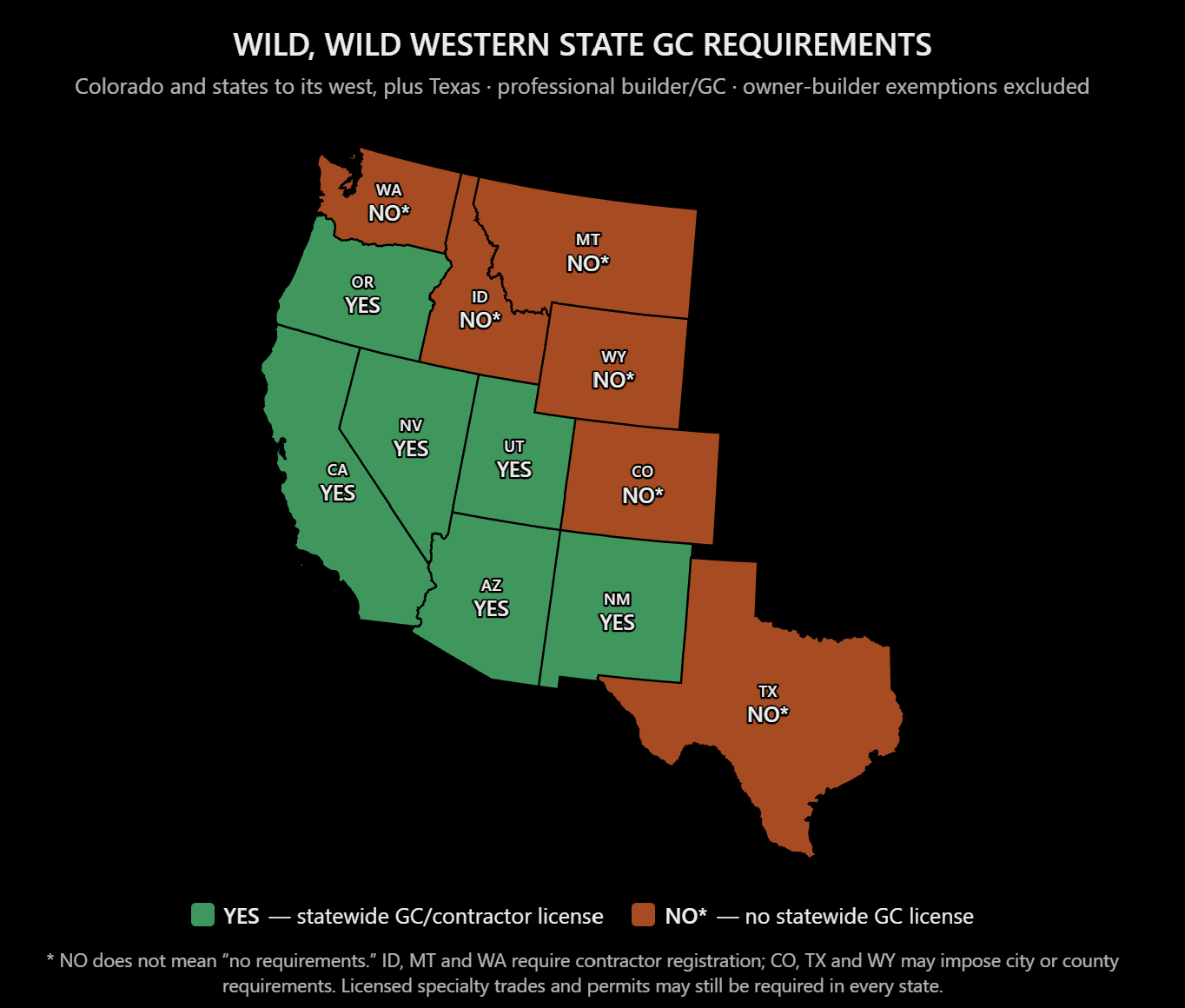
- Registration is not lender approval: State status does not require funding or draws.
- Exemptions are conditional: Do not build a financing plan around a simplified 12-month rule.
- Trades and permits are separate: Electrical, plumbing, HVAC, building, and local requirements can still apply.
The Owner-Builder Definition a Lender May Use
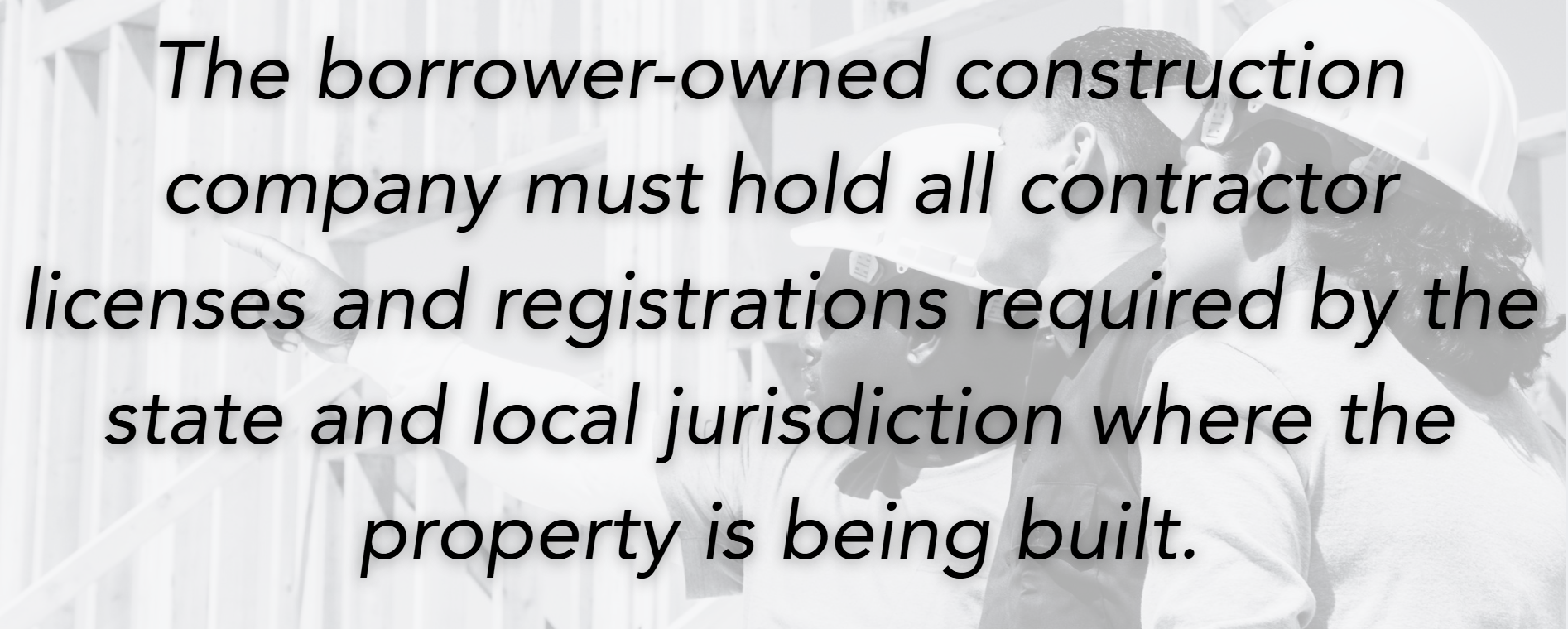
In lending, an acceptable owner-builder can mean more than a homeowner coordinating subcontractors. Some programs may consider a borrower who owns an established construction company and uses it as the builder. That company may need to sign the agreement, manage budget and subs, carry insurance, administer draws, and accept completion responsibility.
A new LLC or a document labeled “construction contract” does not establish operating history, insurance, trade relationships, or lender approval. If the borrower holds direct agreements with many trades, the project may be owner-managed construction—not a complete builder contract with an approved GC.
Why the Construction Agreement Changes the Loan
The document title does not decide who carries risk. A lender needs to know who is the builder, who pays subcontractors, who carries schedule and cost-overrun risk, and who finishes the home.
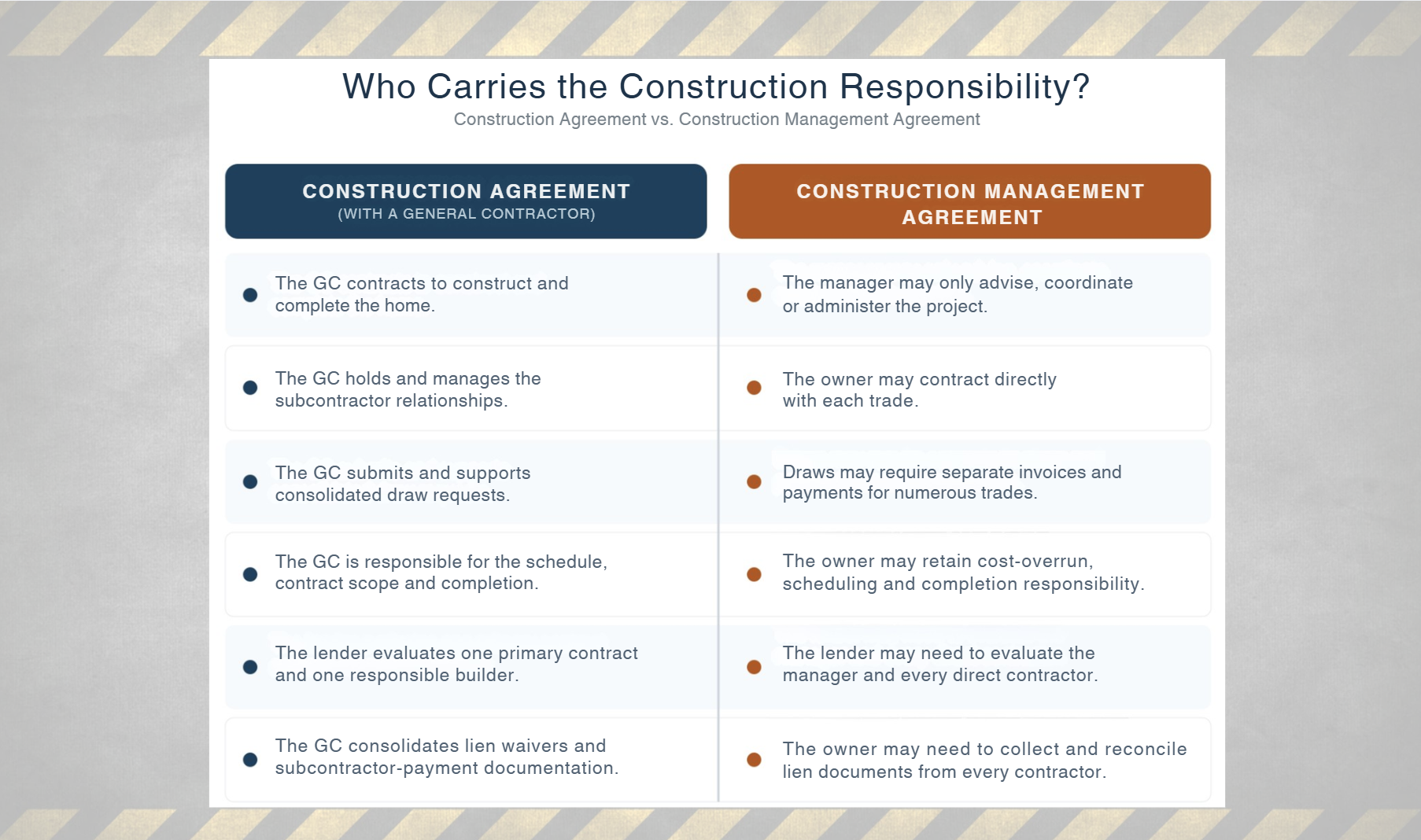
A usable agreement identifies the parties, property, scope, price, allowances, deposits, draws, insurance, permits, change orders, lien documentation, and completion responsibility. A short agreement naming only a price leaves too much unanswered. See the owner-builder financing guide before you commit to the structure.
How Owner-Builder Draws Change the Paperwork
A standard construction loan generally disburses to one approved builder after a draw request, inspection, invoice review, and required lien documentation. One contract, budget, and draw file is relatively clean.
An owner-managed build can create separate scopes, contracts, credentials, insurance, invoices, change orders, payment requests, and lien releases. Paying the borrower, a new borrower-owned company, or each trade can create policy and title questions. Ask how the lender will administer the actual project before you pay deposits.
A Practical Decision Path Before You Sign
Use this short waterfall before signing trade agreements or paying a deposit.
Start With the Structure, Not the Workaround
Idaho may be owner-builder-friendly as a registration matter, but that is not a promise of construction financing. Before you form a company, hire trades, or sign an agreement, Text Matt to discuss the owner-builder, GC, draw, and construction-loan structure for your Idaho build. You can also start with BorrowBuyBuild.com.
This is educational information, not legal advice. Confirm current Idaho registration, permits, trade rules, local requirements, and lender terms for your project.
Frequently Asked Questions
Building in Arizona?
We serve Arizona too — same programs, same specialist.
Single-close construction loans, 5% down, up to $3M. Phoenix, Scottsdale, Tucson, Flagstaff, and beyond.
Continue Reading
Related Articles
Construction Finance
Construction Loan Draw Schedule Explained (Idaho)
Builder Selection
How to Find a Builder for a Construction Loan in Idaho
Builder Contracts
Fixed Price vs Cost-Plus Contract for Idaho Custom Homes
Owner-Builder Process Guide